What are Gas Detector Applications in the Oil and Gas Industry

Oil and gas industries are filled with toxic gases, most of which are odorless and colorless. Employees working there are exposed to various health and industrial hazards, courtesy of toxic gases. What is the best alternative if human senses can’t detect a gas? The obvious option is to install a gas detection system across the entire plant. The smart system will allow you to accurately identify explosive, flammable, and toxic gases at the right time.

Gaseous products like Butane, Hydrogen, and Propane are manufactured in the oil and gas industries. These products are easily combustible, and hence the chances of explosion in these industries are high. It is good practice to install a proficient gas detection system across the entire plant to ensure your workers’ health and safety.

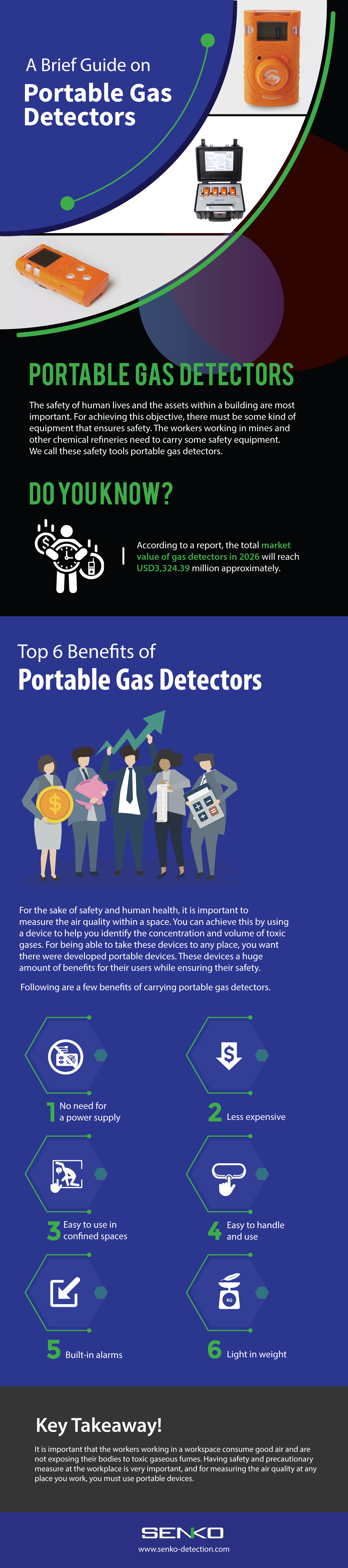
What are Gas Detector Applications in Oil and Gas Industry

Employees working in oil and gas industries are never free of health hazards. Various toxic gases lurk around in the atmosphere, which can cause serious health damages to employees. Some of these gases go unnoticed by human senses.

Do you know?

A human nose has almost 400 smell receptors, allowing us to smell over 1 trillion different scents.

Despite this large number, some gases still go unidentified by humans, and hence the use of a gas detector becomes necessary. Oil and gas industries are filled with such gases, and a gas detector has multiple roles to play there.

Quick Fact:

Over 2000 employees die each year due to carbon monoxide (CO) poisoning in oil and gas industries.

Gas detector applications in the oil and gas industry:

Following are some of the major applications/roles a gas detector plays in the oil and gas industries.

  • Harmful gas detection
  • Fire hazard prevention
  • Oxygen level measurement
  • Real-time alerts about toxic gases presence
  • Immediate gas leak alerts
  • Cost-effective installation
  • Ensure workers’ health and safety
  • Supervise gas concentration levels
  • Real-time leakage updates
  • Measure Oxygen accuracy
  • Data analytics for improved decisions
  • Improved inner air quality

Using the sensors in such environments will give accurate data about the presence of toxic gases in the atmosphere. The management can ensure safety and keep the risk at bay through the use of proficient gas detectors.

Key Takeaway:

Gas detectors are known to detect toxic gases in confined spaces, but only if they are placed in the right place. Too high or too low a position will never allow a gas detector to detect something suspicious, no matter how advanced. The best way to make these devices work is to install them at the right places where they can be heard easily.

Everything You Should Know About Occupational Exposure Limit

Various types of chemical substances and gases are either used or produced in every other industry. These are common in the production units, which implies that the workers in the production units are exposed to gases and chemical substances. Not all gases and substances are safe for human health, and exposure to them can cause serious implications.

The occupational exposure limit represents the number of airborne contaminants like gases, dust and other types of particles to which the workers can be exposed at a specific time. Calculating and maintaining the occupational exposure limits is more than critical to ensure the safety and wellbeing of the workers and avoid legal actions like penalties and suspensions etc.

Keep reading this article to explore everything you should know about occupational exposure limits and make sure to improve the quality and safety of your working environment.

Top 7 Categories of Occupational Exposure Limit You Should Follow

Most of the time, the hazardous and toxic gases in the workplace are the biggest concern of the authorities in terms of better health and overall wellbeing. To maintain the safe level of occupational exposure limit of various gases, the authorities need to measure it with the help of gas detectors. For this, they need to account for various categories of occupational exposure limits too.

Read also : The Ultimate Revelation of Carbon Monoxide Detection System

Here are some of the major categories of occupational exposure limit that various types of organizations should know and follow.

1. Threshold Limit Value

The first category of occupational exposure limit that the authorities should know about is the threshold limit value. The threshold limit value represents the maximum average concentration of the hazardous gases or airborne particles that the workers can be exposed to during a working day or working week. The above of this can initiate legal action against authorities. Due to this, many organizations consult gas detector Dubai based suppliers and ensure to maintain safe levels.

2. Short-Term Exposure Value

The short term exposure limit is the next category of occupational exposure limit that the authorities need to measure essentially. The short term exposure value represents the fifteen minutes of time-weighted average exposure, which should never exceed, in order to minimize the dangers of serious health conditions and damage to property.

3. Time-Weighted Average

Time-weighted average represents the average concentration of toxic, hazardous gases and airborne particles limits that should be maintained in a working atmosphere for an average of eight hours. If the concentration of these hazardous particles or substances increases than the shared limit, it can endanger the life of the workers. This specific category only focuses on eight hours average on routine and not the overall work cycle or work life in the specific atmosphere.

4. Permissible Exposure Limit

Permissible exposure limit in the working atmosphere means the time-weighted average threshold limit of the exposure to the hazardous gases or airborne contaminants that the workers can be exposed to during eight hours. The workers should never be exposed to these chemicals for more than eight hours, or it will threaten their wellbeing and life.

5. Ceiling Exposure Value

The ceiling exposure value represents the maximum concentration of hazardous and toxic substances to which the workers are exposed at any given time. It is an important category of occupational exposure limit that should be monitored and maintained at all times so it does not hurt the health and wellbeing of the workers present in that particular atmosphere for a limited or long time.

6. Acute Exposure

Acute exposure is one of the dangerous categories of occupational exposure limit that the authorities need to be aware of. Acute exposure means single and intense exposure to hazardous gases or toxic substances on a single day. Acute exposure is dangerous as it can cause serious threats to health and lead to death in a few minutes or hours.

7. Chronic Exposure

The last category of occupational exposure limit that the authorities need to watch out for is chronic exposure. Chronic exposure represents the recurring or continuous exposure of the workers to hazardous gases or toxic substances over a long time of at least three months or more. It can cause chronic health conditions leading to suffering and death. You can contact gas detector Dubai based suppliers and make arrangements to maintain a safe working atmosphere, so it does not take a toll on the health of your workers.

Watch and maintain exposure levels for a safe working atmosphere!

Now that you have sufficient knowledge about occupational exposure limits and its various categories, you must implement them in your practice and ensure the safety of workers and workspace. However, you need to be aware of the fact that manual measurement of hazardous substances, gases and particles is not possible. You need to install gas detectors and watch the concentration levels. So, contact the professionals to invest in the best detectors and reap the benefits.


Related articles:
Gas Detection System for Various Work Areas: A Brief Guide

Detections systems are the safety tools and equipment that use sensor technology and generate an alarm upon detecting things for which they are designed. These systems can be found in various designs, shapes, and types.

At a workplace, various elements are used, resulting in life-taking accidents if not notified on time. Most workplace accidents include fires and explosions. These fires and explosions do not start on their own; rather, certain elements and accidents result in such situations. One of the major reasons for fires and explosions is the gas leakages and electric short circuits.

For both, problems detection systems can be used, and preventive measures can be taken before it causes too much destruction to the people and building. The highest number of fires and explosions occur when there is a gas leakage and humans could not detect it on time. These leakages catch fire upon a single spark and could bring a single building down in seconds. Knowing these gaseous leakages at the workplace is important, and for that, you must install a quality gas detection system. Such systems will inform you about any such changes on time and take control of the situation.

Gas Detection System

What are detection systems?

Detections systems are the safety tools and equipment that use sensor technology and generate an alarm upon detecting things for which they are designed. These systems can be found in various designs, shapes, and types.

Top 6 industries where gas detectors are a must to use

Following are the type of industries and work areas where detection systems are a must.

  • Oil and gas industry
  • Mining industry
  • Chemical refineries
  • Wastewater treatment plants
  • Laboratories
  • Semiconductor manufacturing industries

Top 8 benefits of detection systems at the workplace

The number of risks and threats at a workplace is higher, and it is important to take action and safety measures. It has become very important for workplaces to install detection systems to detect the risks and threats on time and make quick escapes from the place to avoid any injuries and deaths.

Following are some more benefits of installing detection systems at the workplace.

  1. Safety of lives
  2. Safety of the property
  3. Timely actions
  4. Minimize fire risks
  5. Reduced diseases
  6. Informs about changing gaseous concentrations
  7. Inexpensive affordable tools
  8. Timely and quick escapes

Key takeaway!

For ensuring your workplace safety, it is important to take safety measures and actions. Installing detection systems and technologies will help reduce risks to a great extent.


Recommended articles:

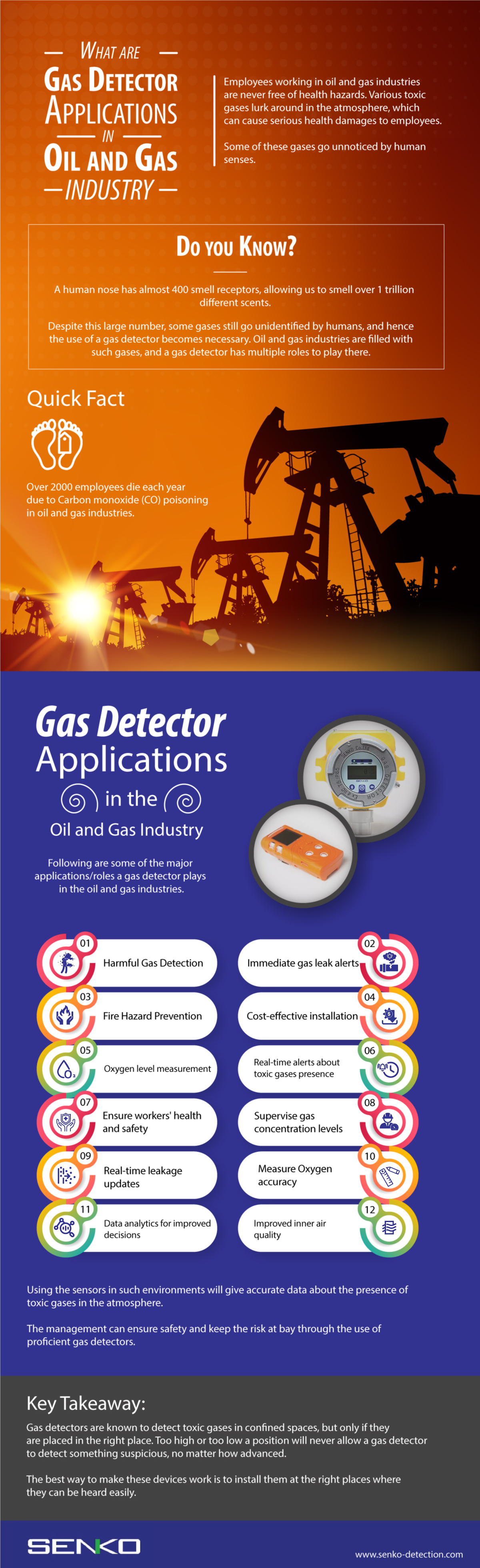
A Brief Guide on Portable Gas Detectors

There are some threats and dangerous things that we can see with our naked eye, but there are also a few things that the human eye cannot identify. These dangerous substances can cause irrecoverable damages to human health and result in deaths and fatalities.

For avoiding loss of lives and human health, one must use equipment that can help them identify toxic substances in the space that could affect their health. One thing you can do to ensure safety at the workplace is to embed safety devices and equipment. These fixed devices will provide safety only within the range, not outside its range.

Due to these considerations, you can use portable devices that will give you workplace safety from life-taking gases at any place you work. These portable devices are designed so that they are light in weight and easier to use. You can ensure your safety even in confined spaces and avoid any human loss in such dangerous places.

The devices you use for safety purposes must be of good quality and give you accurate numbers and volumes of toxic gases. These devices are useless and more damaging when they give you false alarms or do not give you any alarm in a dangerous situation. For getting better quality safety equipment, ask for the services of gas detectors Dubai based suppliers. You can also get customized detectors according to your need and requirement.

So, keep the above benefits of the safety equipment in mind and go to the right people to get the best device and equipment.

Portable Gas Detectors

The safety of human lives and the assets within a building are most important. For achieving this objective, there must be some kind of equipment that ensures safety. The workers working in mines and other chemical refineries need to carry some safety equipment. We call these safety tools portable gas detectors.

Do you know?

According to a report, the total market value of gas detectors in 2026 will reach USD3,324.39 million approximately.

Top 6 benefits of portable gas detectors

For the sake of safety and human health, it is important to measure the air quality within a space. You can achieve this by using a device to help you identify the concentration and volume of toxic gases. For being able to take these devices to any place, you want there were developed portable devices. These devices a huge amount of benefits for their users while ensuring their safety.

Following are a few benefits of carrying portable gas detectors.

  1. No need for a power supply
  2. Less expensive
  3. Easy to use in confined spaces
  4. Easy to handle and use
  5. Built-in alarms
  6. Light in weight

Key takeaway!

It is important that the workers working in a workspace consume good air and are not exposing their bodies to toxic gaseous fumes. Having safety and precautionary measure at the workplace is very important, and for measuring the air quality at any place you work, you must use portable devices.

Design a site like this with WordPress.com
Get started